
UFC • All-Time Rankings
The Top Ten Greatest UFC Fighters of All Time
Ranking the greatest fighters to ever compete inside the UFC—from heavyweight legends to generational champions.
By Justice Paulus
Published · Updated
Reading time: Approximately 15–20 minutes
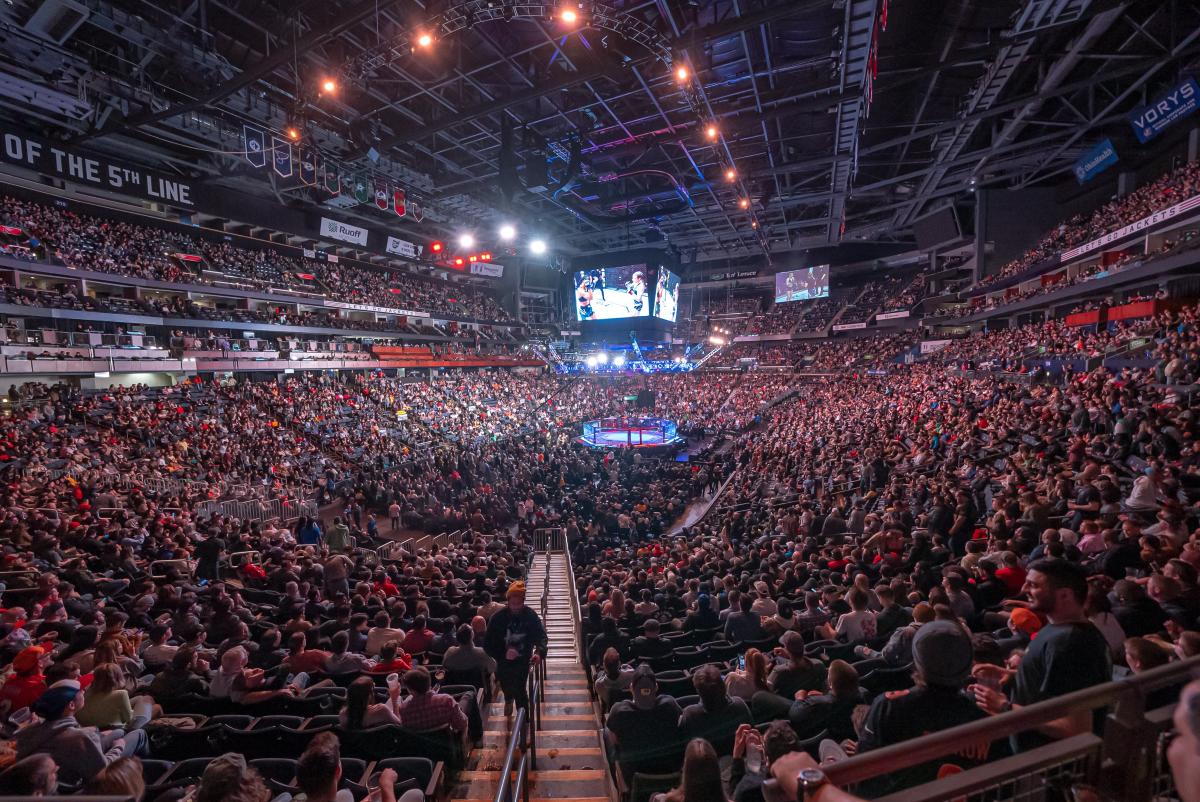
Every all-time ranking in combat sports is an argument, not a measurement. There is no formula that resolves who was greater, only competing definitions of greatness—and anyone who tells you otherwise is selling certainty that the sport has never offered.
This list is deliberately not a count of title defenses. It is not a count of championships, a reading of UFC record books, a tally of career statistics, or a measure of popularity. Those numbers describe careers; they do not rank them.
What this ranking weighs instead is the complete picture: fighting ability, championship success, level of competition, dominance, longevity, strength of résumé, quality of victories, versatility, fight IQ, career accomplishments, and historical significance. A short reign against murderous opposition can outweigh a long one against a thin division. A single tactical performance can say more than five routine defenses.
What follows is one writer's evaluation of the ten greatest fighters ever to compete inside the UFC, counted down in reverse order. Disagreement is the point.
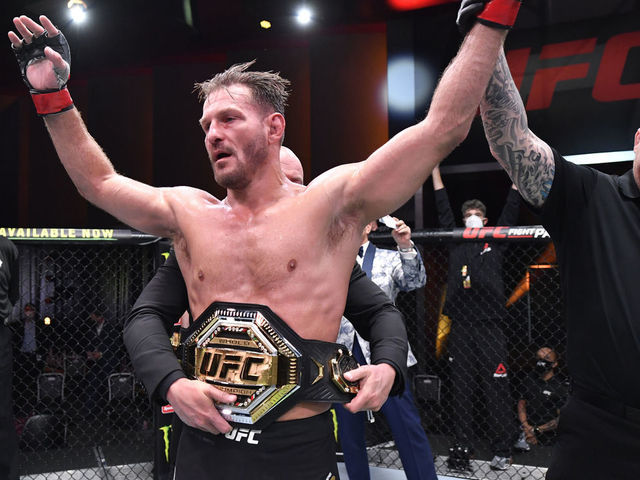
#10 Stipe Miocic
Accolades
- Professional Record
- 20–5
- Championships
- UFC Heavyweight Champion
- Weight Classes
- Heavyweight
- Signature Strength
- Boxing fundamentals under pressure
Heavyweight is the division where greatness usually goes to die. Power is universal, chins erode, and one clean exchange can end a decade of work. That context is the whole argument for Stipe Miocic: he built the most stable championship reign the UFC heavyweight division has ever seen, in the one weight class where stability is close to impossible.
What separated Miocic was not raw athleticism but craft. He fought behind a genuine boxing structure—jab first, hands returning to the guard, weight distributed so he could punch, defend, or shoot a takedown from the same stance. Against heavyweights who tend to load up and swing, that discipline compounded round after round.
His wrestling was the second pillar. Miocic could change levels convincingly against strikers and defend against grapplers, which meant opponents rarely got to fight the fight they had trained for. Add cardio that reliably outlasted the division and durability that carried him through firefights, and you have a champion with no obvious door to walk through.
The first Francis Ngannou fight remains the purest illustration of his intelligence. Facing arguably the most feared puncher in the sport's history, Miocic did not try to out-brawl him. He absorbed the early storm, managed distance, took the fight into deep water, and used wrestling and positional control to drain a finisher of everything that made him dangerous. It was a tactical masterclass, not a display of superior physical gifts.
He sits at ten rather than higher because his career includes decisive losses at the very top and because his best years, while remarkable for a heavyweight, are shorter than those of the fighters above him. But the résumé is undeniable: he beat the best version of nearly every contender his era produced.
Notable Victories
- /Daniel Cormier
- /Francis Ngannou
- /Junior dos Santos
- /Fabrício Werdum
- /Alistair Overeem
- /Andrei Arlovski
#9 Khabib Nurmagomedov
Accolades
- Professional Record
- 29–0
- Championships
- UFC Lightweight Champion
- Weight Classes
- Lightweight
- Signature Strength
- Chain wrestling against the fence
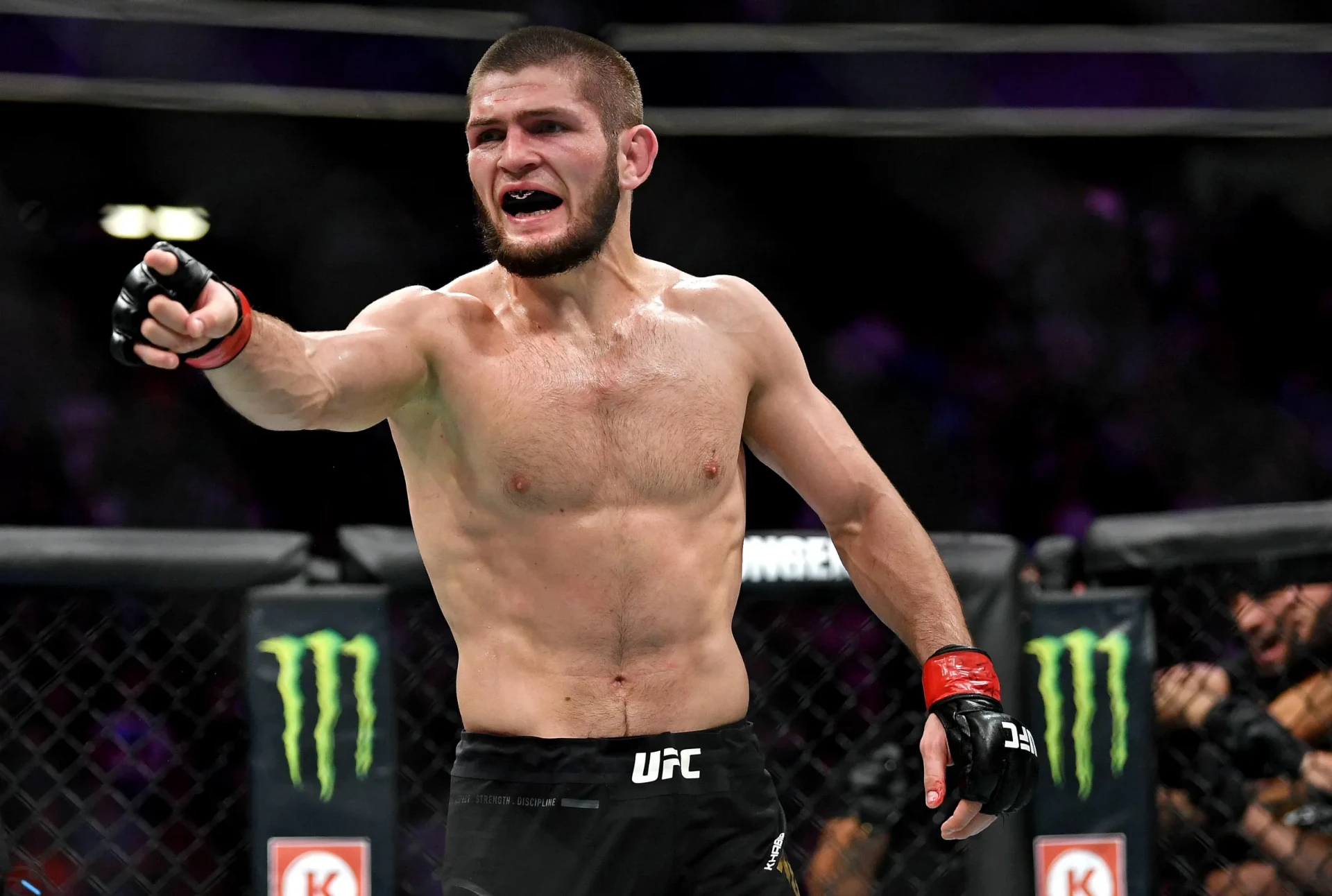
Khabib Nurmagomedov is the most overwhelming specialist the UFC has ever produced. He retired at 29–0, and the number understates it: the vast majority of those fights were not competitive in any meaningful sense. Opponents knew exactly what was coming and still could not stop it.
The system was chain wrestling married to cage pressure. He walked opponents backward, took away the space they needed to strike, and converted the fence into a wall he could work against. Trips, mat returns, wrist control, hip pressure—each element existed to remove options rather than to score points.
Once he arrived on top, the fight effectively ended as a contest. His ground-and-pound was less about single fight-ending shots than about forcing defensive reactions that opened up better positions, and his cardio meant the pressure never relented. He did not out-point people. He removed their ability to compete.
The résumé is short but heavy: a former champion in Rafael dos Anjos, the sport's biggest star in Conor McGregor, and two of the most dangerous lightweights of the era in Dustin Poirier and Justin Gaethje—each of whom found real moments before being systematically dismantled.
What keeps him at nine is scope. His championship run was relatively brief compared with several fighters above him, he competed in a single weight class, and injury and absence limited the volume of elite scalps. Dominance this complete deserves the top ten; the fighters ahead of him simply did more of it, for longer, against wider styles.
Notable Victories
- /Rafael dos Anjos
- /Conor McGregor
- /Dustin Poirier
- /Justin Gaethje
#8 José Aldo Jr.
Accolades
- Professional Record
- 32–10
- Championships
- UFC Featherweight Champion (also WEC Featherweight Champion)
- Weight Classes
- Featherweight (later Bantamweight)
- Signature Strength
- Leg kicks and counter striking
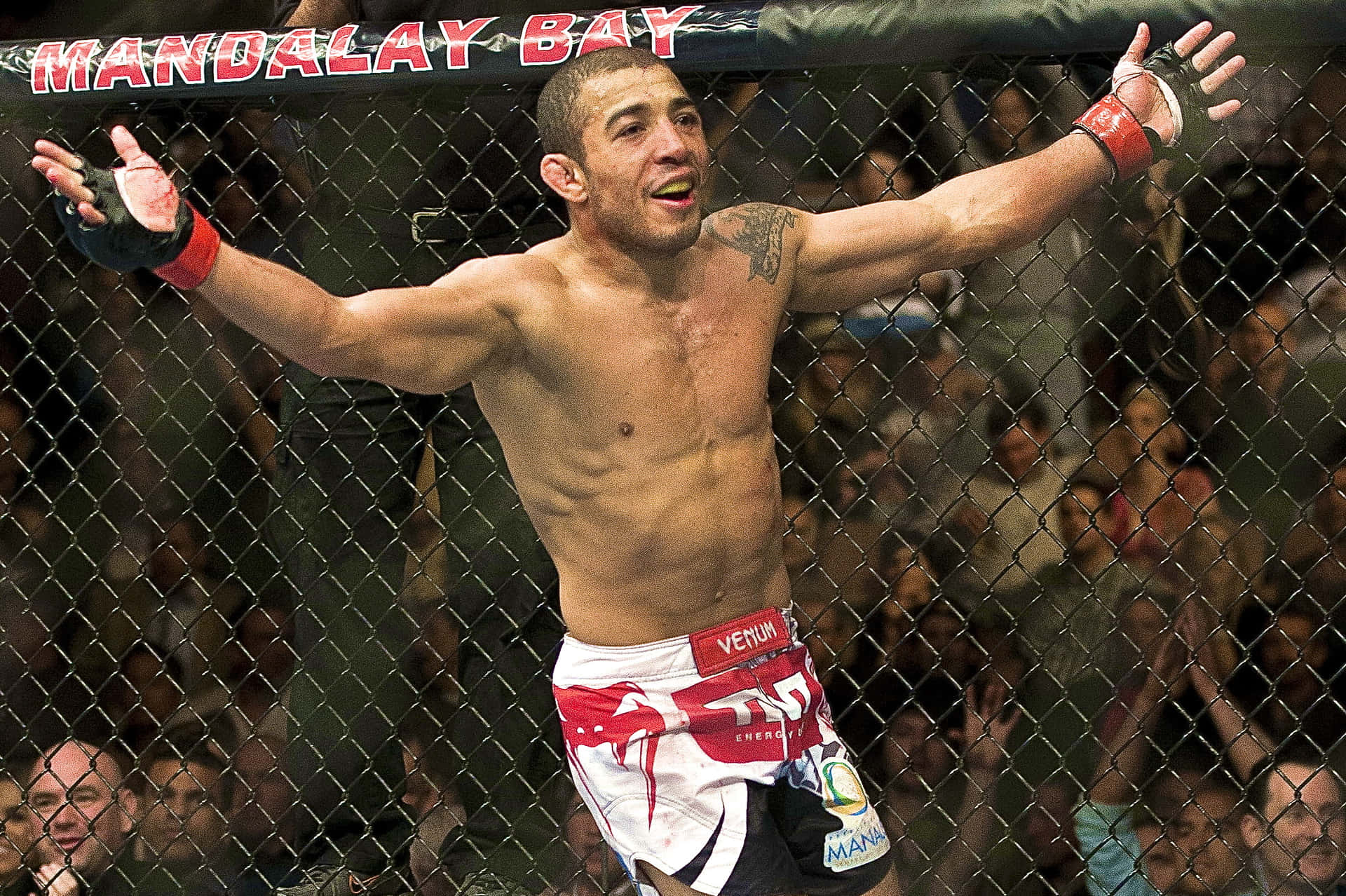
Prime José Aldo was, for a stretch of years, the most complete fighter on the planet. He was a knockout artist who could also win championship rounds, a striker whose takedown defense was so good that wrestlers stopped trying, and a champion who arrived at the top absurdly young and simply stayed there.
His Muay Thai was violent and precise: leg kicks that visibly changed the way opponents stood, body work that surfaced in the later rounds, and blistering hand speed off short, compact combinations. The leg attack in particular was a career-defining weapon, dismantling opponents structurally before it ever needed to finish them.
His defensive wrestling deserves equal billing. Aldo turned elite grapplers into strikers by making the takedown attempt expensive—hips heavy, underhooks immediate, and counters ready the instant they exposed themselves shooting.
The scope of his reign matters, too. Aldo dominated the featherweight division across both the WEC and the UFC, holding the belt continuously through eras and rule sets that produced entirely different generations of challengers. Very few fighters remain elite that long after becoming champion in their early twenties.
He ranks eighth because the later years of his career included clear defeats at the highest level, and because the fighters above him combined comparable peaks with either more adaptability or more sustained championship control.
Notable Victories
- /Chad Mendes
- /Frankie Edgar
- /Urijah Faber
- /Ricardo Lamas
- /Chan Sung Jung
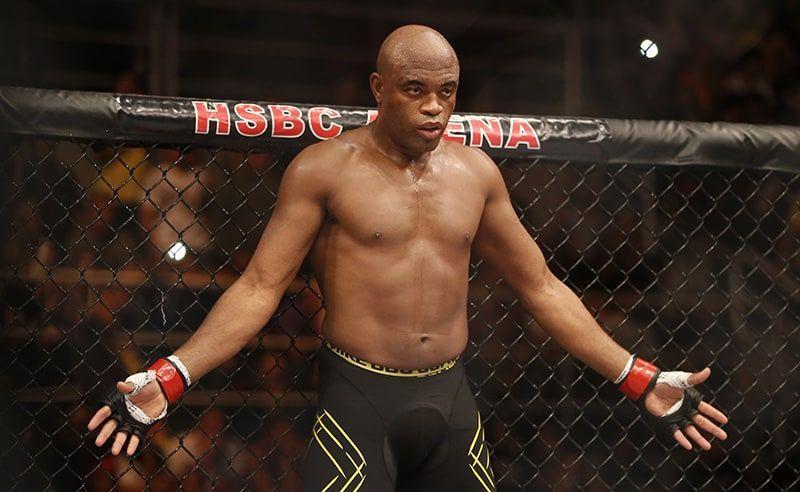
#7 Anderson Silva
Accolades
- Professional Record
- 34–11 (1 NC)
- Championships
- UFC Middleweight Champion
- Weight Classes
- Middleweight, Light Heavyweight
- Signature Strength
- Counter striking and distance control
Prime Anderson Silva made elite fighters look like they had never trained. That is the simplest way to describe a striking peak that redefined what was technically possible inside the cage.
Silva's game was built on information. He read rhythm, baited leads, and punished them with counter striking that combined absurd accuracy with almost no wasted motion. His head movement created openings, his distance control decided where every exchange happened, and his knees and kicks in the clinch turned defensive positions into finishes.
The performances speak for themselves. He took the middleweight title from Rich Franklin and repeated the result. He moved up to light heavyweight and dismantled Forrest Griffin while walking backward. He met Vitor Belfort—one of the fastest strikers of the previous generation—and ended it with a single front kick that has become part of the sport's permanent highlight vocabulary.
His grappling was chronically underrated. Silva held a genuinely dangerous submission game and repeatedly turned bad positions into fight-ending sequences, most famously by threatening off his back against wrestlers who thought top position was safety.
Seventh reflects the whole arc: an era-defining peak, a long championship reign, and then a decline that arrived sharply and was never reversed. The greatness is beyond dispute; the fighters above him simply held their level longer or across wider challenges.
Notable Victories
- /Rich Franklin
- /Forrest Griffin
- /Vitor Belfort
- /Chael Sonnen
- /Dan Henderson
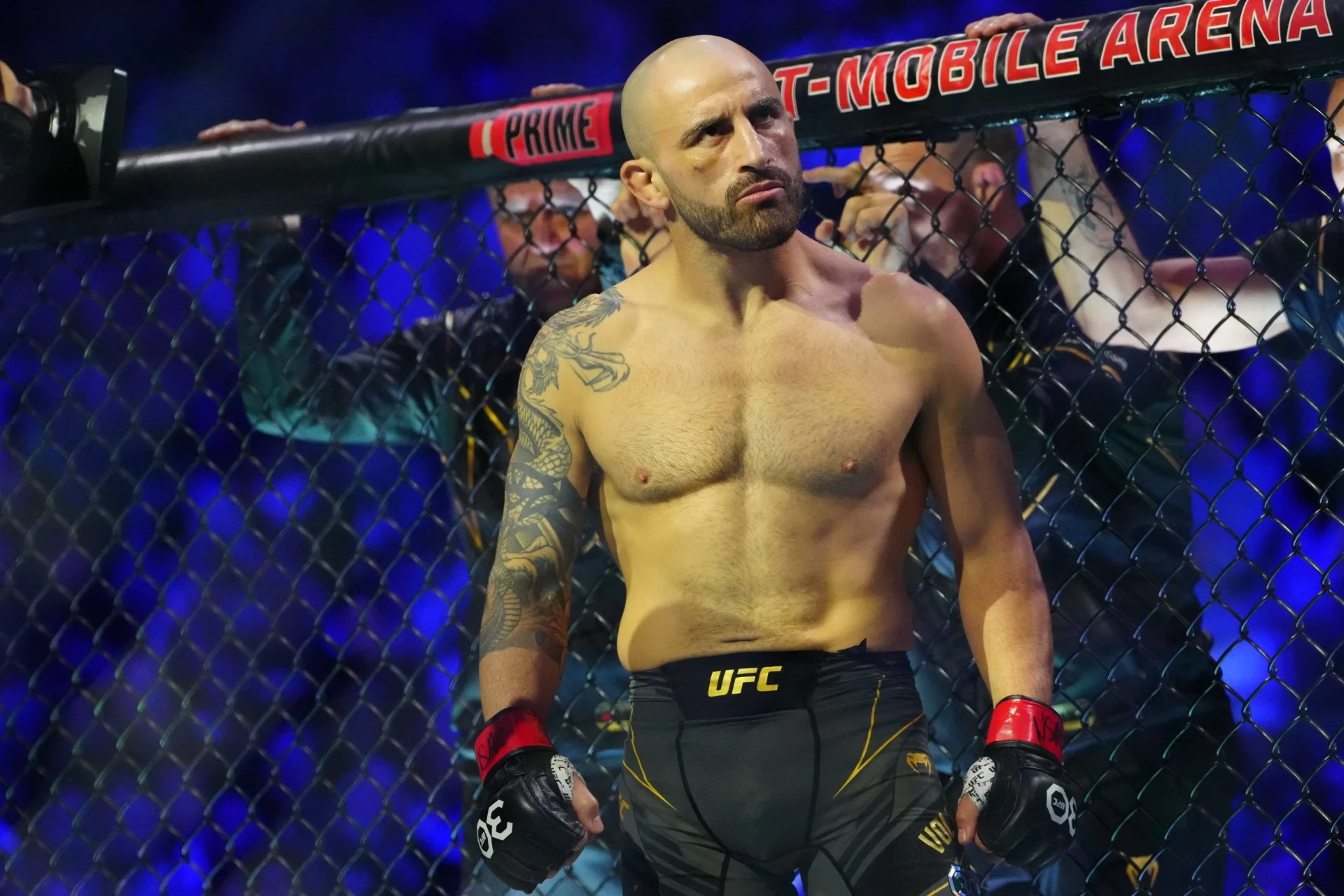
#6 Alexander Volkanovski
Accolades
- Professional Record
- 28–4
- Championships
- UFC Featherweight Champion
- Weight Classes
- Featherweight (challenged at Lightweight)
- Signature Strength
- Mid-fight tactical adjustment
At his peak, Alexander Volkanovski was the hardest fighter in mixed martial arts to solve strategically. Opponents did not lose to a single overwhelming weapon; they lost to a fighter who kept changing the problem faster than they could work on it.
The tools were footwork, feints, and distance management. Volkanovski entered on angles, layered feints until reads became unreliable, and left with combinations rather than single shots. Underneath it sat defensive wrestling strong enough that grapplers were forced to strike with him, which was exactly where he wanted them.
His trilogy with Max Holloway is the case file. Each fight was different, and each time Volkanovski arrived with a materially revised plan—pressure in one, calculated volume in another, and in the third a comprehensive performance that answered every remaining question about the matchup.
His first fight with Islam Makhachev, taken up a division against a significantly larger champion, may be the single best illustration of his fight IQ. He was competitive in every phase against a grappler most featherweights would have no framework to survive.
Sixth is a reflection of era and scale: a genuinely dominant featherweight reign, elite adaptability, and a late-career record that includes losses at the very top of a division above his own.
Notable Victories
- /Max Holloway
- /José Aldo
- /Brian Ortega
- /Yair Rodríguez
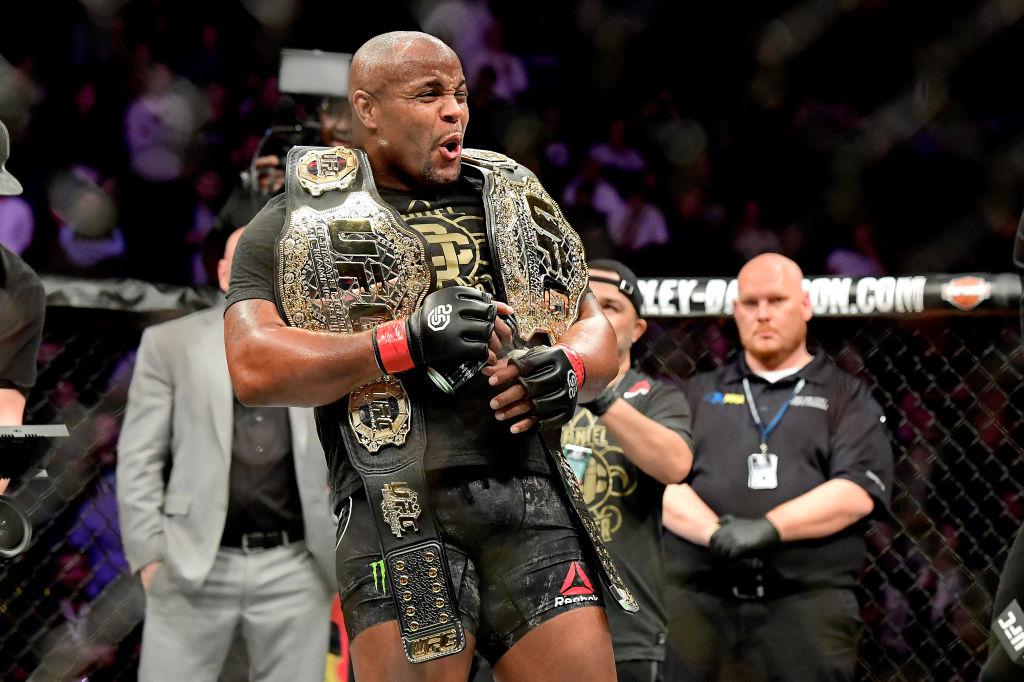
#5 Daniel Cormier
Accolades
- Professional Record
- 22–3 (1 NC)
- Championships
- UFC Light Heavyweight & Heavyweight Champion
- Weight Classes
- Light Heavyweight, Heavyweight
- Signature Strength
- Clinch wrestling against larger opponents
Daniel Cormier's greatness looks larger every time you account for the size of the men he was fighting. He gave up reach, height, and frequently weight, and he beat elite opposition anyway—in two different divisions.
The foundation was Olympic-level wrestling, but the expression of it was uniquely his. Cormier fought in the clinch better than almost anyone in the sport's history: head position, underhooks, short elbows, dirty boxing, and trips that arrived the instant an opponent's weight shifted. Against bigger men, he simply removed the range where their size mattered.
His hands were badly underrated too. Cormier had genuine speed and timing, and he could hurt heavyweights with punches that had nothing to do with wrestling setups. Combine that with an exceptional chin and a fight IQ that rarely spent energy on the wrong thing, and prime Cormier was a nightmare stylistic assignment.
The résumé backs it: a heavyweight championship win over Stipe Miocic, plus victories over Alexander Gustafsson, Anthony Johnson, Josh Barnett and Frank Mir. That is a list of elite fighters across two divisions and multiple styles.
The losses to Jon Jones are the ceiling on this placement, and it would be dishonest to pretend otherwise. But losing to the fighter ranked first on this list, in competitive fights, does not diminish what prime Cormier was: one of the most difficult men in MMA history to defeat.
Notable Victories
- /Stipe Miocic
- /Alexander Gustafsson
- /Anthony Johnson
- /Josh Barnett
- /Frank Mir
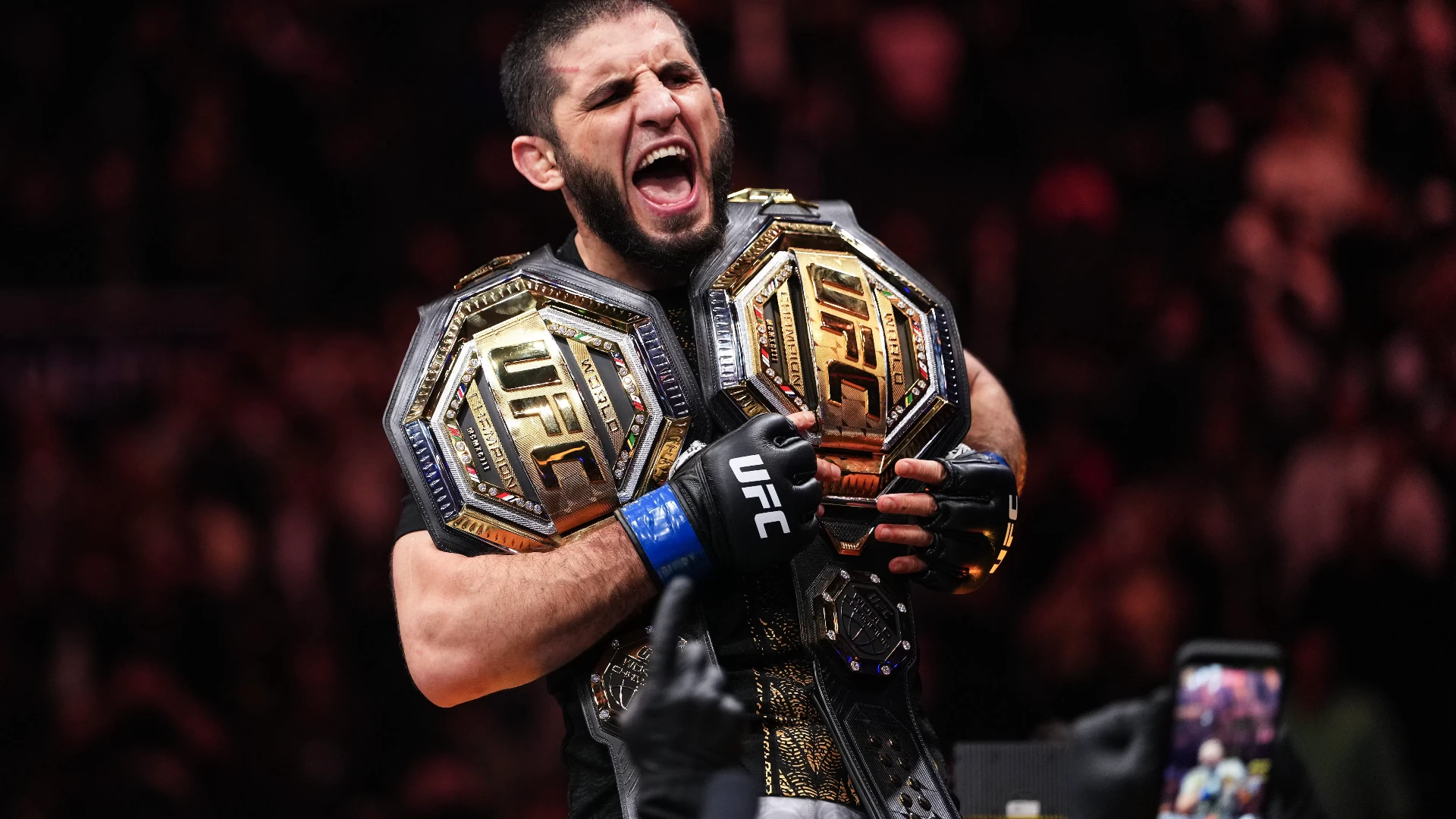
#4 Islam Makhachev
Accolades
- Professional Record
- 29–1
- Championships
- UFC Lightweight & Welterweight Champion
- Weight Classes
- Lightweight (and above)
- Signature Strength
- Chain grappling with real striking threat
Islam Makhachev represents the most complete modern evolution of the Dagestani grappling system—not a copy of what came before it, but a version rebuilt for opponents who had spent years studying how to stop it.
The grappling remains the engine. Trips, body-lock entries, chain sequences that flow from a failed attempt into a successful one, and positional control that turns rounds into long, suffocating stretches. Where the system historically ended in ground-and-pound, Makhachev added a genuine submission threat that forces defensive mistakes.
The important development is what he built on top of it. The stereotype of the one-dimensional grappler does not apply here: he improved to the point of competing with world-class strikers on the feet, managing distance, landing meaningful power, and using striking as an honest threat rather than a takedown setup.
That combination is why matchups against him are so difficult to plan. Defending the wrestling requires a posture that leaves you vulnerable to strikes; respecting the strikes creates the level-change opportunities he wants. Fight IQ ties it together—he almost never forces an exchange the situation does not offer.
Fourth is a placement based on a career still being written, but the body of work already includes championship-level dominance against elite opposition, and the completeness of the skill set is closer to the men above him than the men below.
Notable Victories
- /Charles Oliveira
- /Alexander Volkanovski
- /Dustin Poirier
- /Bobby Green
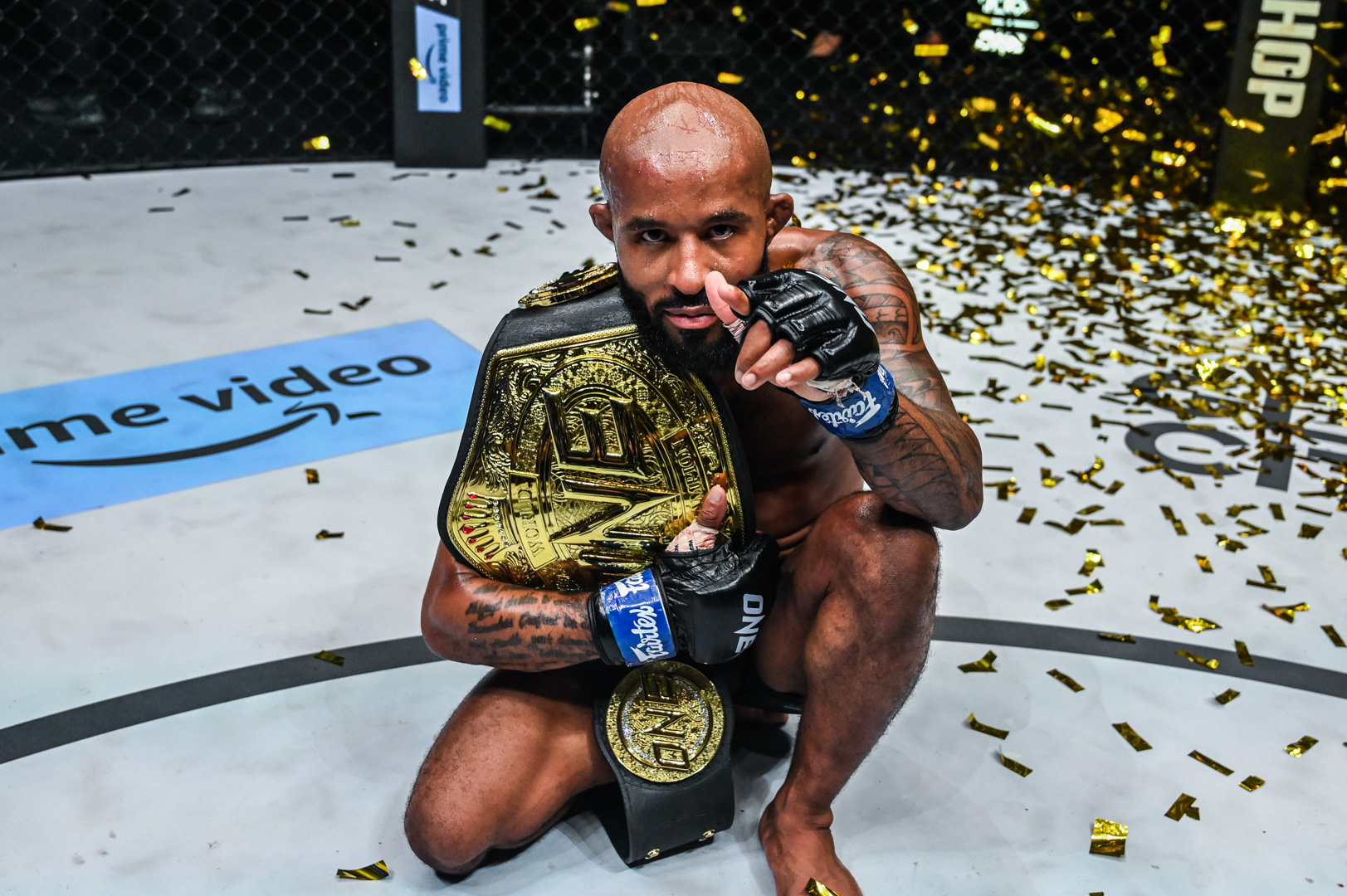
#3 Demetrious "Mighty Mouse" Johnson
Accolades
- Professional Record
- 25–4–1
- Championships
- UFC Flyweight Champion
- Weight Classes
- Flyweight, Bantamweight
- Signature Strength
- Transitional grappling and scrambles
Demetrious Johnson may be the most technically complete mixed martial artist who has ever competed. Not the biggest star, not the most marketed, but the fighter whose game had the fewest seams anywhere in it.
Striking, wrestling, submissions, scrambles, cardio, transitions—Johnson operated at an elite level in every one, and more importantly moved between them without any loss of speed. Most fighters have a phase where they are vulnerable in transition. Johnson used that phase as an attacking position.
His speed and cardio allowed him to compound advantages. He would out-strike opponents into a takedown, out-scramble them into back control, and out-pace them into the championship rounds. Defensively, that same fluency meant almost nothing landed cleanly on him for long.
The suplex-to-armbar finish against Ray Borg is the single clearest artifact of his creativity: a sequence that most fighters would not attempt, executed in real time at championship level. It is the kind of technique that only exists when a fighter's understanding of the sport is generations ahead of the norm.
Competing in one of the sport's lightest divisions kept him out of some mainstream conversations. That is a marketing fact, not a competitive one—and it should not reduce a career this dominant and this technically advanced.
Notable Victories
- /Joseph Benavidez
- /Henry Cejudo
- /John Dodson
- /Ray Borg
- /Kyoji Horiguchi
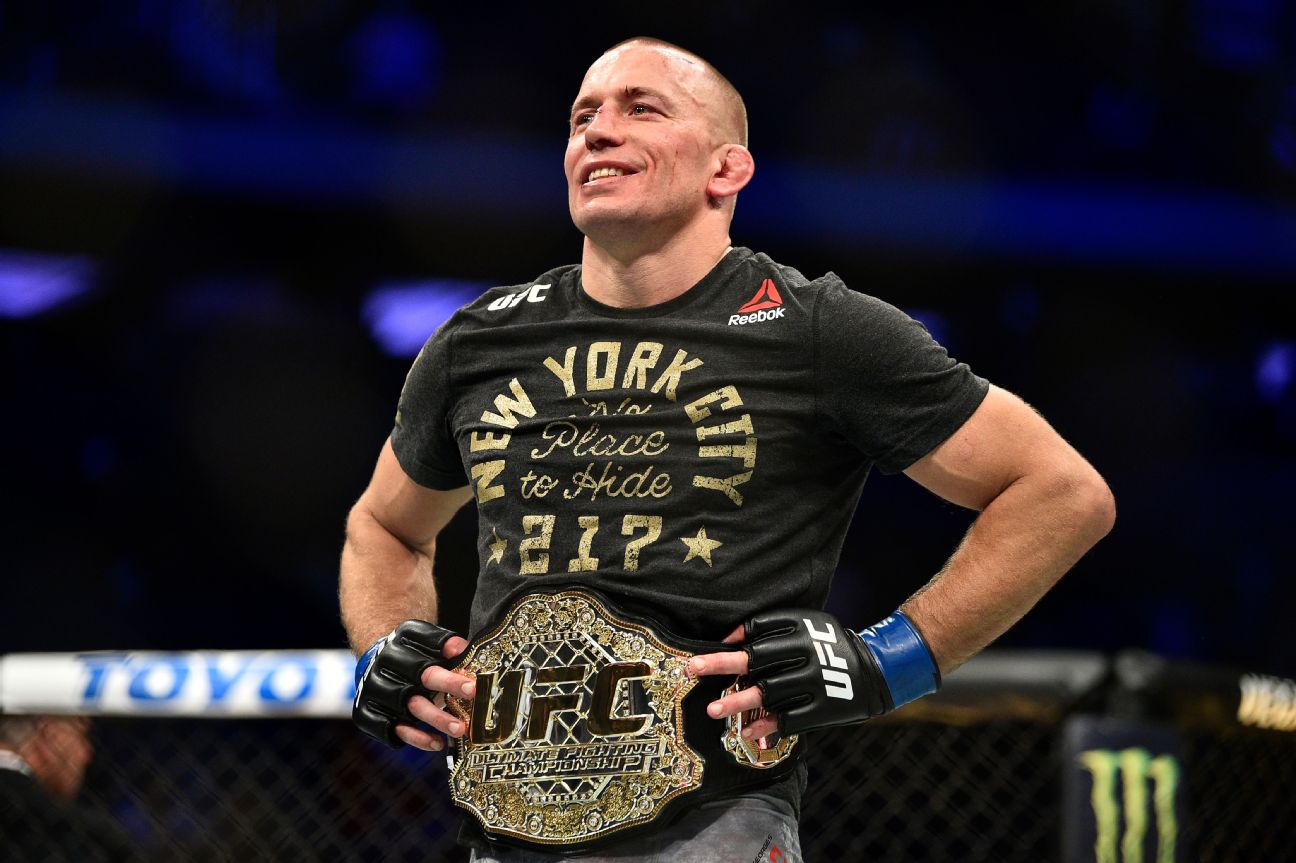
#2 Georges St-Pierre
Accolades
- Professional Record
- 26–2
- Championships
- UFC Welterweight & Middleweight Champion
- Weight Classes
- Welterweight, Middleweight
- Signature Strength
- Jab-led game planning and MMA wrestling
Georges St-Pierre is the sport's great problem-solver. Where other champions imposed one dominant skill, GSP built the specific fighter required to beat the man in front of him—and then executed it almost perfectly.
The jab is the signature. It controlled range, set the rhythm, and functioned as the entry point for everything else: the superman punch, the level change, the clinch. Behind it were explosive takedowns and top control so heavy that elite grapplers spent entire rounds defending rather than working.
What makes the wrestling remarkable is its origin. St-Pierre did not come from an elite traditional wrestling background, yet he developed arguably the best MMA wrestling of his generation—takedowns built specifically for a striking context, chained off punches and timed against reactions rather than borrowed wholesale from another sport.
The résumé is also the cleanest kind of argument. He suffered two career defeats and avenged both decisively, removing the usual asterisks entirely. He then defended a welterweight championship across multiple generations of elite contenders and later returned to win a title in a heavier division after a long layoff.
Discipline is the throughline. Game plan, execution, adaptation, repeat—for years, against everyone. That consistency is why he ranks above every fighter on this list except one.
Notable Victories
- /Matt Hughes
- /BJ Penn
- /Johny Hendricks
- /Nick Diaz
- /Michael Bisping
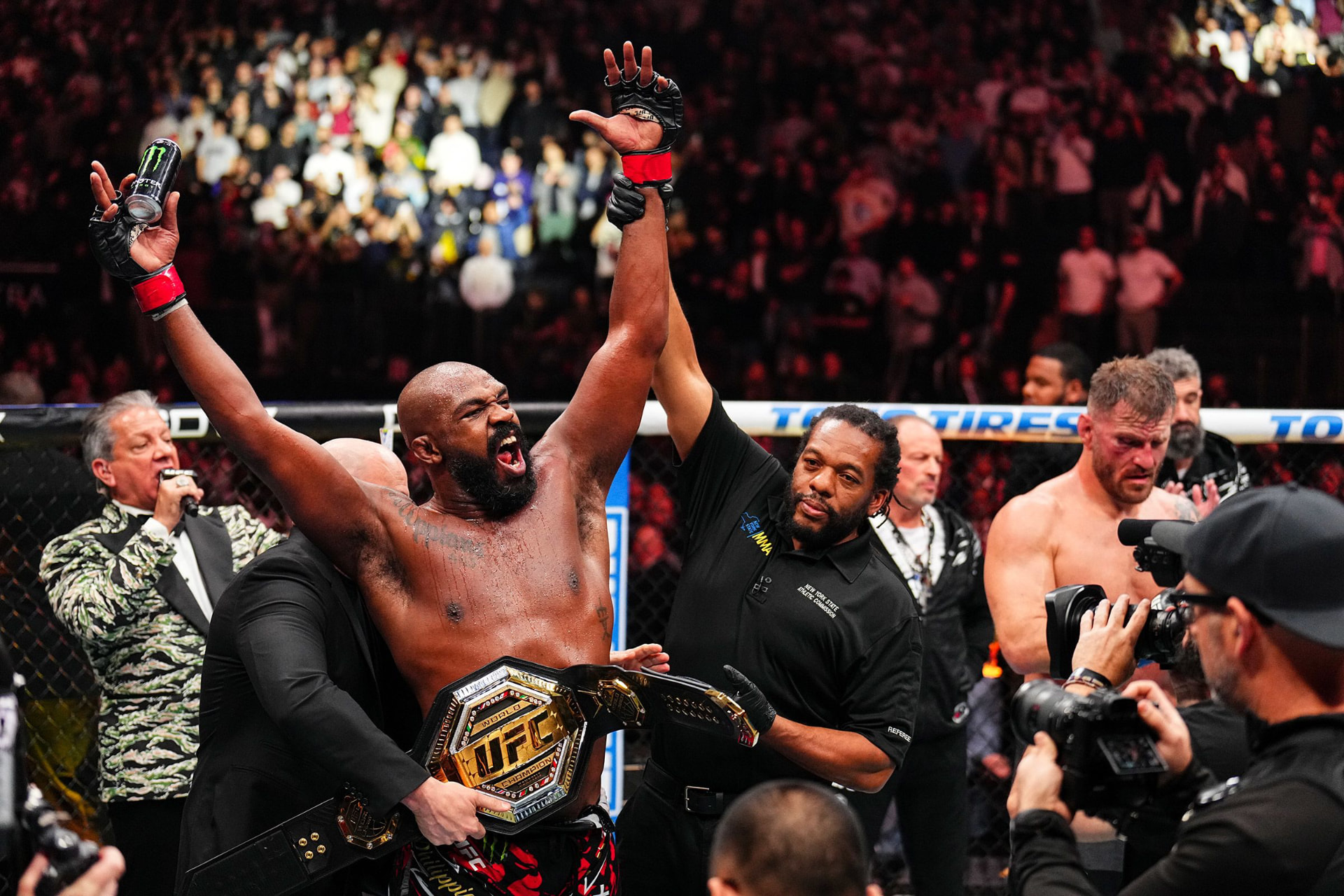
#1 Jon "Bones" Jones
Accolades
- Official Record
- 28–1 (1 NC)
- Championships
- UFC Light Heavyweight & Heavyweight Champion
- Weight Classes
- Light Heavyweight, Heavyweight
- Signature Strength
- Reach management and stylistic adaptability
The central argument of this ranking is straightforward: Jon Jones has the strongest overall case for being the greatest UFC fighter of all time. He won championships in two divisions, defeated multiple generations of elite opposition, and for well over a decade was never convincingly beaten inside the cage by another fighter.
Any honest account has to begin with the official record, and with a clear line between what the record says and how a writer interprets it. Jones's official record includes one disqualification loss and one no contest. Neither should be quietly erased, and neither is a simple story.
The disqualification came against Matt Hamill. Jones was dominating the fight when he was disqualified for the use of 12-to-6 elbows—strikes that were illegal under the Unified Rules at the time and that the rules were later amended to permit. The official result stands as a loss and this article does not alter it. From this author's perspective, however, it does not represent Jones being defeated by another fighter: he was winning comprehensively, and the infraction, not the opponent, ended the contest.
The second Daniel Cormier fight is the harder subject. Jones originally won by knockout/TKO before the result was overturned to a no contest following a positive drug test. That controversy is real and should not be dismissed, and speculation about the broader scope of performance-enhancing drug use is not something that can be presented as established fact. The defensible position is narrow and stated plainly: on the night, Jones physically defeated Cormier—and the official result is, correctly, a no contest.
Set alongside that context is a body of work no one else on this list matches. Jones beat Daniel Cormier, Alexander Gustafsson, Maurício "Shogun" Rua, Lyoto Machida, Rashad Evans, Quinton "Rampage" Jackson, Glover Teixeira, Vitor Belfort and Chael Sonnen at light heavyweight, then moved to heavyweight and won a championship against Ciryl Gane before defeating Stipe Miocic. Those names span three distinct eras of the sport.
Technically, he is a genuine hybrid. His wrestling was strong enough to control Olympic-caliber opponents; his striking was creative and awkward by design—oblique kicks, spinning elbows, sidekicks to the knee—all built around reach management that let him fight in a range no one else could occupy. In the clinch he was punishing, on the ground he was a legitimate submission threat, and his fight IQ was such that game plans changed round to round rather than fight to fight.
Most tellingly, he beat every kind of fighter. Elite strikers, elite wrestlers, elite grapplers, larger heavyweights, faster light heavyweights—styles that troubled other champions never produced a coherent blueprint against him. Add the durability to absorb the hardest moments of his career and keep winning, and the case is complete: the most difficult opponent the UFC has ever produced.
Notable Victories
- /Daniel Cormier
- /Alexander Gustafsson
- /Maurício "Shogun" Rua
- /Lyoto Machida
- /Rashad Evans
- /Quinton "Rampage" Jackson
- /Glover Teixeira
- /Vitor Belfort
- /Chael Sonnen
- /Ciryl Gane
- /Stipe Miocic
The Final Verdict
Comparing fighters across eras is an exercise in accepting incomplete information. The rules changed. The rounds changed. Weight classes were added, championship structures were reorganized, training methods advanced generation by generation, and the depth of any given division rose and fell with the sport's popularity.
A dominant champion in one era might have faced three genuinely elite contenders across a full reign; a champion a decade later might face that many in eighteen months. Styles that were unsolvable in one period became routine problems in the next. Judging across those gaps requires interpretation, and interpretation is where honest people separate.
So there will never be a completely objective UFC GOAT ranking. What exists instead are defensible ones—positions that state their criteria clearly, weigh the evidence consistently, and acknowledge what they cannot prove.
This ranking's position is that Jon Jones sits at the top, on the strength of two-division championship dominance, victories across three generations of elite opposition, and the absence of a clean defeat by another fighter. Behind him, Georges St-Pierre, Demetrious Johnson, Islam Makhachev, Daniel Cormier, Alexander Volkanovski, Anderson Silva, José Aldo, Khabib Nurmagomedov and Stipe Miocic complete an extraordinary top ten—any of whom could be argued upward by a reader weighing the same criteria differently.
Who Is Your UFC GOAT?
Rankings like these are made to be debated. Who would you put at #1, and who did we leave out?
Related UFC Rankings
- Greatest UFC Heavyweights of All TimeComing soon
- Greatest UFC Champions of All TimeComing soon
- Most Dominant UFC Fighters EverComing soon
- Best UFC Strikers of All TimeComing soon
- Best UFC Grapplers of All TimeComing soon